
A client called to discuss how to protect his sons after he was gone… without creating any conflict.
Several years earlier, he had worked with an attorney to establish a trust. A professional trustee would manage the assets, a trust protector would provide oversight, and both sons would be protected from outside pressure or impulsive decisions.
But life had changed. The trustee had relocated abroad. The trust protector was in declining health. And the client realized he had built the structure around assumptions about what his sons needed, without ever asking them.
How trusts can create unintended friction
Trusts can protect beneficiaries by limiting direct control over inherited assets. But that protection comes with tradeoffs. A professional trustee has legal authority to approve or deny distributions, even for reasonable requests such as buying a home or funding a business. The trustee is paid from trust assets, and beneficiaries who disagree may need legal counsel. Cross-border situations add another layer, since trust taxation can become significantly more complicated when both the U.S. and Israel are involved.
In families where communication has been limited, these constraints can increase tension. One son may feel micromanaged. The other may resent the implication that he cannot be trusted with money. A well-meaning safeguard can feel like control from beyond the grave.
When assumptions replace conversation
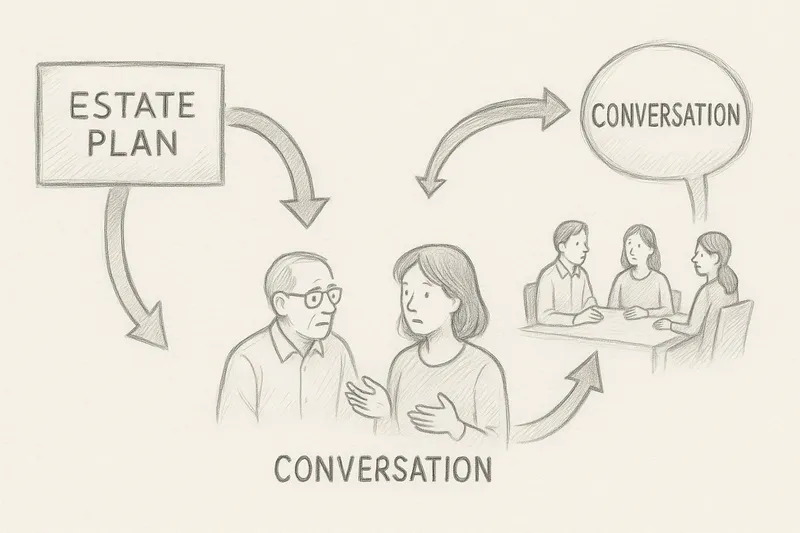
The real issue was not only the trust’s structure. It was that the people the plan was designed to protect had never been consulted. The client had made decisions based on his fears, not on what his sons actually needed.
I suggested a family meeting, not to present finished decisions, but to explore them together. He could ask each son about his relationship with money, his confidence managing it, and what genuinely worries him. The goal was not to tear up the trust, but to make sure the structure reflected actual needs rather than untested fears.
Estate planning is not purely a legal exercise. It is also a family process. When parents involve adult children before documents are signed, the resulting plans can be leaner, more practical, and easier to carry out. (Consult a qualified estate-planning attorney about your specific situation.)
If you are managing U.S. assets from Israel and working through estate decisions across borders, a professional review can help. Visit profile-financial.com/call or contact us at 02-624-2788.
Douglas Goldstein, CFP® is the director of Profile Investment Services, Ltd. profile-financial.com. He is a licensed financial professional both in the U.S. and Israel. Call (02) 624-2788 for help with your U.S. brokerage and IRA accounts. Securities offered through Portfolio Resources Group, Inc. Member FINRA, SIPC, MSRB, FSI. The author’s opinions are not necessarily those of PRG or its affiliates. Neither PRG nor its affiliates provide tax or legal advice.
Published July 7, 2026.