
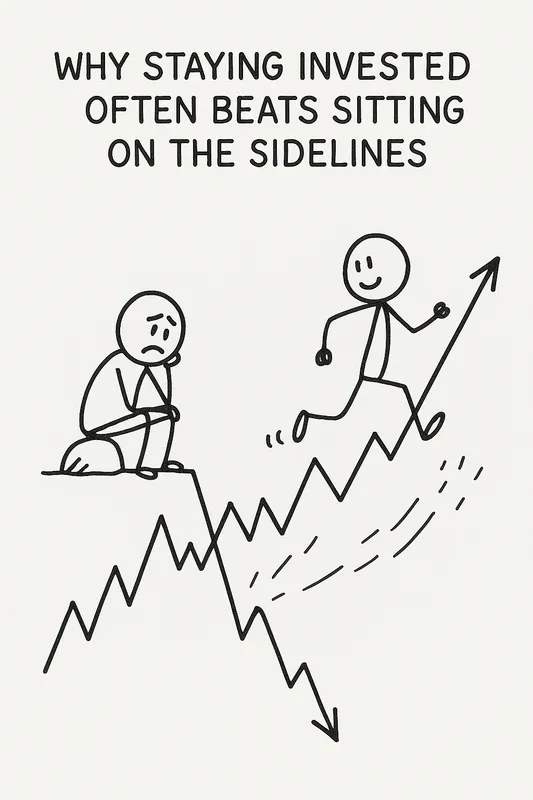
A client called recently, unsettled by the headlines. Markets were choppy, pundits were predicting the worst, and the urge to pull back felt overwhelming. It was a familiar conversation. Every few years, there is a new reason to panic: A pandemic, trade wars, rate hikes, tariffs, a debt crisis overseas. Each time, smart people predict crashes. Each time, the market eventually moves higher.
That does not mean crashes never happen, nor does it mean markets *have to *move higher. But it does mean that trying to predict them is extremely difficult, and sitting out often costs more than riding through.
The price of missing the best days
Research from major investment firms paints a consistent picture. Investors who stayed fully invested over a twenty-year period earned significantly higher returns than those who missed even a handful of the market’s best days. Missing just ten of those days cut returns nearly in half. Missing thirty brought returns close to zero. The problem is that the best days tend to cluster right after the worst ones. Stepping out during scary times usually means missing the recovery too.
Other studies confirm that market timing rarely works, even for professionals. You have to be right multiple times, and being wrong just once can erase years of gains.
What long-term investing actually looks like
It is natural to feel uneasy when volatility spikes. But for investors with a long time horizon, the evidence strongly favors staying the course. The companies in a well-built portfolio are generating real earnings, building infrastructure, and driving productivity. That is different from speculative bubbles where valuations had no foundation.
None of this means ignoring your own comfort level. If stepping back helps you sleep at night, that is a valid choice. But if the goal is long-term growth, history tends to reward patience over prediction. Focusing on fundamentals and filtering out short-term noise has consistently been the more reliable path.
If you are an American living in Israel and want to talk through how your portfolio is positioned for the long term, visit profile-financial.com/call or call 02-624-2788.
Douglas Goldstein, CFP® is the director of Profile Investment Services, Ltd. profile-financial.com. He is a licensed financial professional both in the U.S. and Israel. Call (02) 624-2788 for help with your U.S. brokerage and IRA accounts. Securities offered through Portfolio Resources Group, Inc. Member FINRA, SIPC, MSRB, FSI. The author’s opinions are not necessarily those of PRG or its affiliates. Neither PRG nor its affiliates provide tax or legal advice.
Published August 11, 2026.